
LeaFlow
General-Purpose Segmentation, Reconstruction, Simulation
Agentic workflows

LeaFlow is Medlea’s next-generation simulation engine, designed to model complex flow dynamics across a wide range of anatomical systems.
Unlike traditional approaches, LeaFlow is a modular, multiphysics simulation framework capable of representing blood, air, lymph, urinary excretion, and the propagation of drugs, contrast agents, or pathogens.
Integrated device-human modeling
LeaFlow strength lies in its ability to simulate the interaction between medical devices and the human body, a powerful tool for innovation in the medtech sector. Whether it is a catheter, an implant, an aerosol device, or a robotic procedure, LeaFlow simulates the patient-specific environment under realistic physiological conditions.
What sets LeaFlow apart is its multiphysics foundation combined with support for dynamic and moving boundaries, essential for understanding how devices and tissues co-evolve during use.
Whether you are a clinician preparing for a procedure or a developer of implantable devices, LeaFlow optimizes device-human interactions safely and with unmatched realism.
Join the Early Access Program
We review all requests to ensure a personalized experience
Applications
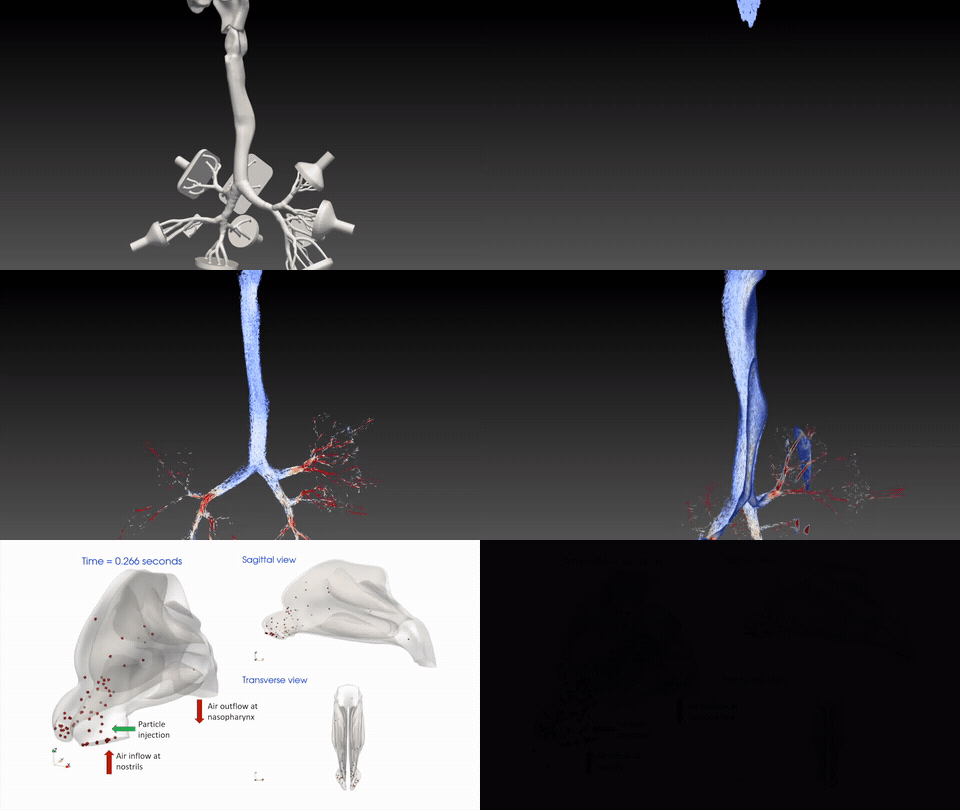
In respiratory care, LeaFlow simulates aerosol-based drug delivery systems, nebulizers, and smart inhalers. It models how particles generated by the device move through dynamic airway geometries, deposit in target regions, or are exhaled. It also supports simulations of airway management devices such as endotracheal tubes or bronchial blockers, showing how they alter flow patterns or increase regional stress — key data for optimizing ventilation strategies.
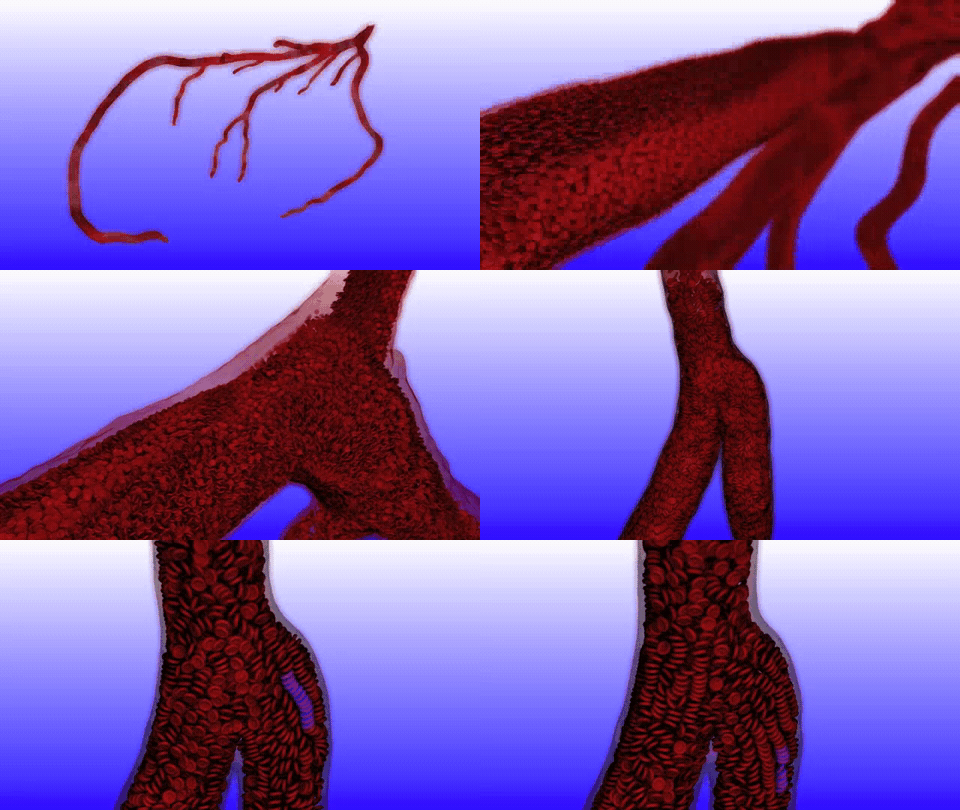
In the cardiovascular field, LeaFlow simulates the implantation of stents, grafts, and valves, assessing their effects on local flow dynamics, wall shear stress, and downstream perfusion. It evaluates the risk of restenosis, thrombosis, or embolization by combining patient-specific anatomy with fluid dynamics and particle transport. The platform supports pre-procedural planning as well as virtual prototyping of new cardiovascular devices.
In renal and urological systems, LeaFlow simulates the insertion of ureteral stents, catheters, or implants such as artificial sphincters. It models how these devices influence urinary dynamics, local pressure gradients, and the flow of particles or sediments. This capability extends to simulating scenarios such as stent encrustation, reflux prevention, or the impact of partial obstruction.
Device design teams use LeaFlow to iteratively test prototypes in realistic virtual anatomies, reducing reliance on animal models and physical prototypes.
Anatomical reconstruction from imaging

LeaFlow features an advanced imaging pipeline that transforms tomographic datasets, such as CT and MRI scans, into anatomically accurate 3D models.
The platform automatically identifies and reconstructs airways, vascular structures, renal tracts, and other flow-relevant anatomical domains. The resulting models maintain detailed spatial fidelity, capturing both macrostructure and fine features critical for physiological simulations. This capability supports personalized decisions and predictive diagnostics.
Integration with CAD
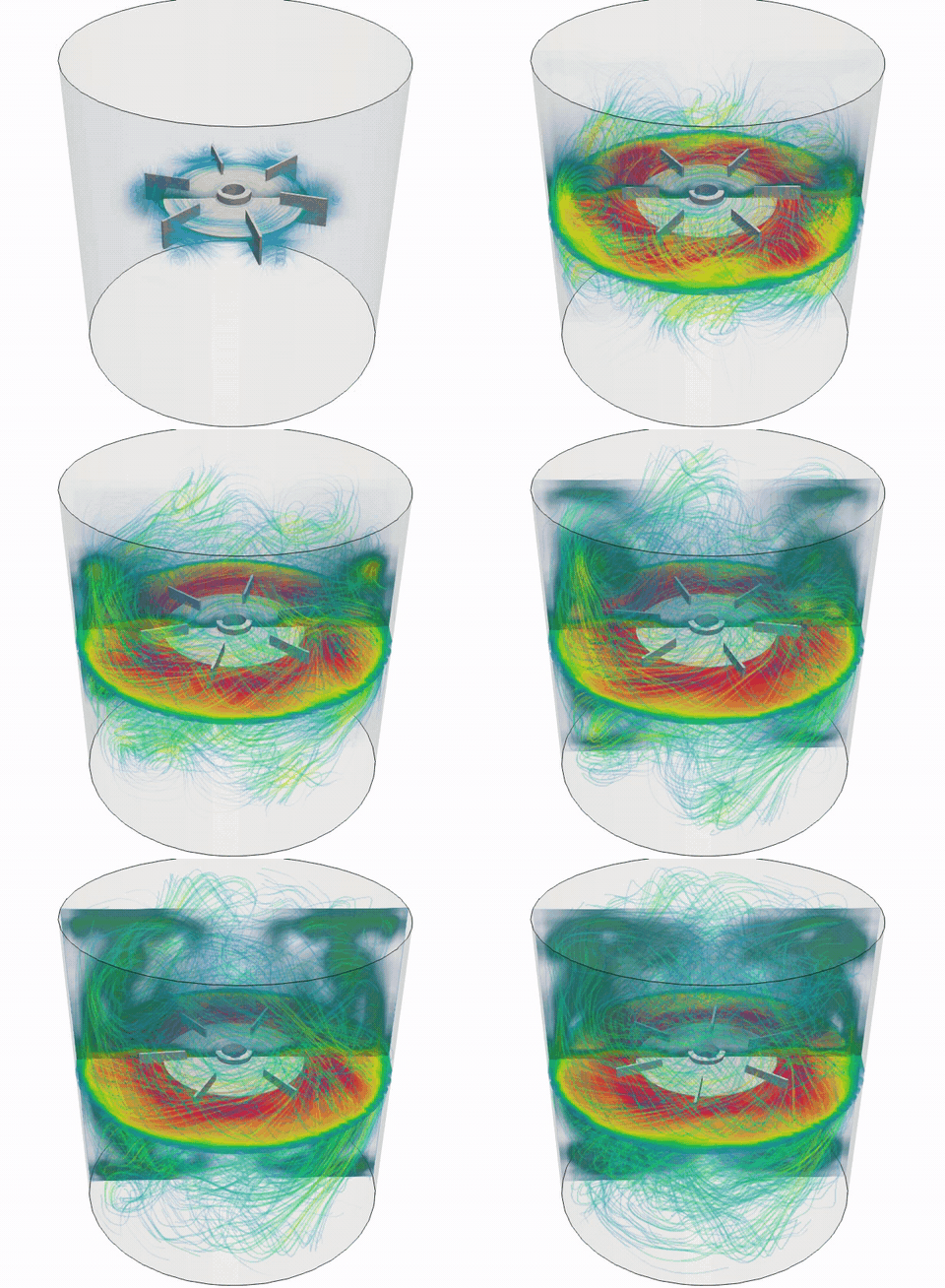
LeaFlow is fully integrated with industry-standard CAD platforms, enabling the import, modification, and export of customized geometries within anatomical contexts. Engineers and designers can insert medical devices such as stents, valves, catheters, or delivery systems into patient-specific models and examine how their geometry affects local flow and tissue interaction. Additionally, anatomical models can be exported to CAD environments for advanced geometric manipulation, structural analysis, or 3D printing.
Integrate clinical and engineering collaboration
By combining automated reconstruction and CAD compatibility, LeaFlow provides a unified workflow for clinical and engineering teams.
Surgeons can visualize proposed device placements within real anatomy, while biomedical engineers can simulate dynamic mechanical responses under realistic physiological conditions.
Whether the goal is to plan a procedure, validate a new device prototype, or assess performance under adverse scenarios, LeaFlow connects imaging, simulation, and design in a continuous collaborative cycle.
Simulate in the Cloud
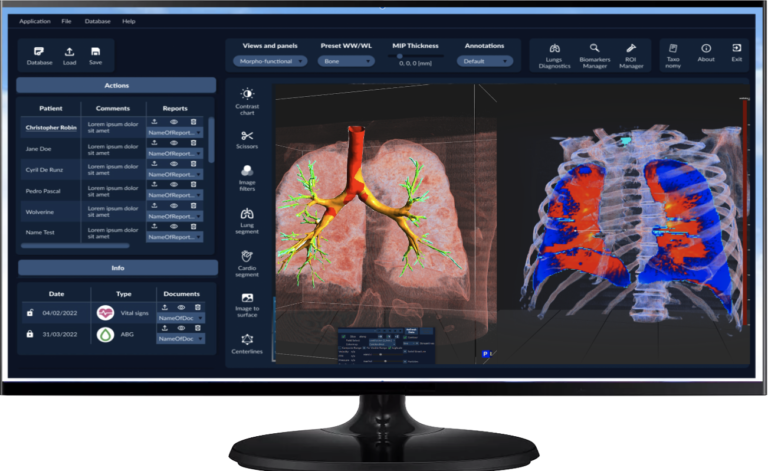
Designed with scalability and accessibility in mind, LeaFlow runs in both cloud-based and on-premises computing environments, using GPU acceleration for real-time or batch simulations. Its API-oriented architecture supports integration with surgical planning tools, training simulators, and regulatory-compliant validation pipelines.
With an intuitive visual interface and detailed output data analysis, including velocity fields, deposition maps, pressure gradients, and residence times, LeaFlow transforms complex biomechanics into actionable insights. More than a flow simulator, LeaFlow represents a leap forward in dynamic physiological modeling, at both patient-specific and system levels.