
LeaFlow
범용 세그먼트, 재구성, 시뮬레이션
에이전트 워크플로우

LeaFlow은 광범위한 해부학 시스템에서 복잡한 흐름 역학을 모델링하도록 설계된 Medlea의 차세대 시뮬레이션 엔진입니다.
기존 접근법과 달리 LeaFlow은 혈액, 공기, 림프, 소변 배설 및 약물, 조영제 또는 병원체의 전파를 나타낼 수 있는 모듈식 다중 물리학 시뮬레이션 프레임워크입니다.
통합 장치-인간 모델링
LeaFlow의 강점은 메드테크 부문의 혁신을 위한 강력한 도구인 의료 기기와 인체 간의 상호 작용을 시뮬레이션하는 능력에 있습니다. 카테터, 임플란트, 에어로졸 장치 또는 로봇 시술 등 LeaFlow은 현실적인 생리적 조건 하에서 환자별 환경을 시뮬레이션합니다.
LeaFlow을 차별화하는 것은 동적이고 움직이는 경계에 대한 지원과 결합된 다중 물리학 기반이며, 사용 중에 장치와 조직이 어떻게 함께 진화하는지 이해하는 데 필수적입니다.
귀하가 시술을 준비하는 임상의이든 이식 가능한 장치의 개발자이든, LeaFlow은 타의 추종을 불허하는 현실감으로 장치-인간 상호 작용을 안전하게 최적화합니다.
선공개 프로그램에 참여하세요
맞춤 서비스를 제공하기 위해 모든 요청을 검토합니다.
적용 분야
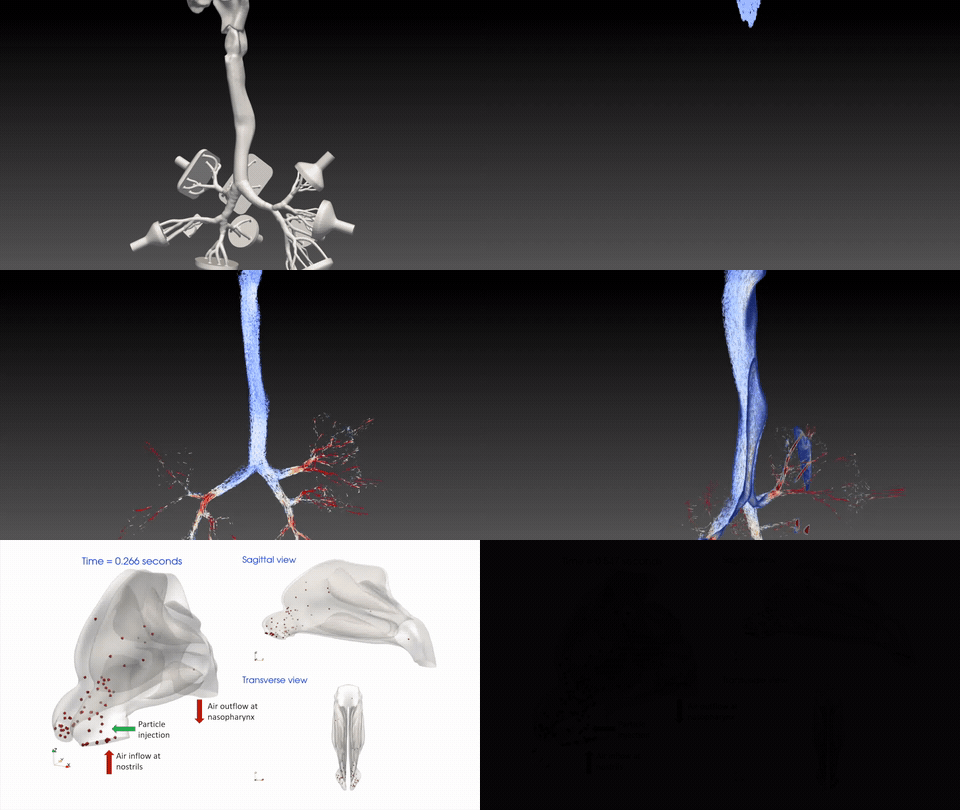
In respiratory care, LeaFlow simulates aerosol-based drug delivery systems, nebulizers, and smart inhalers. It models how particles generated by the device move through dynamic airway geometries, deposit in target regions, or are exhaled. It also supports simulations of airway management devices such as endotracheal tubes or bronchial blockers, showing how they alter flow patterns or increase regional stress, key data for optimizing ventilation strategies.
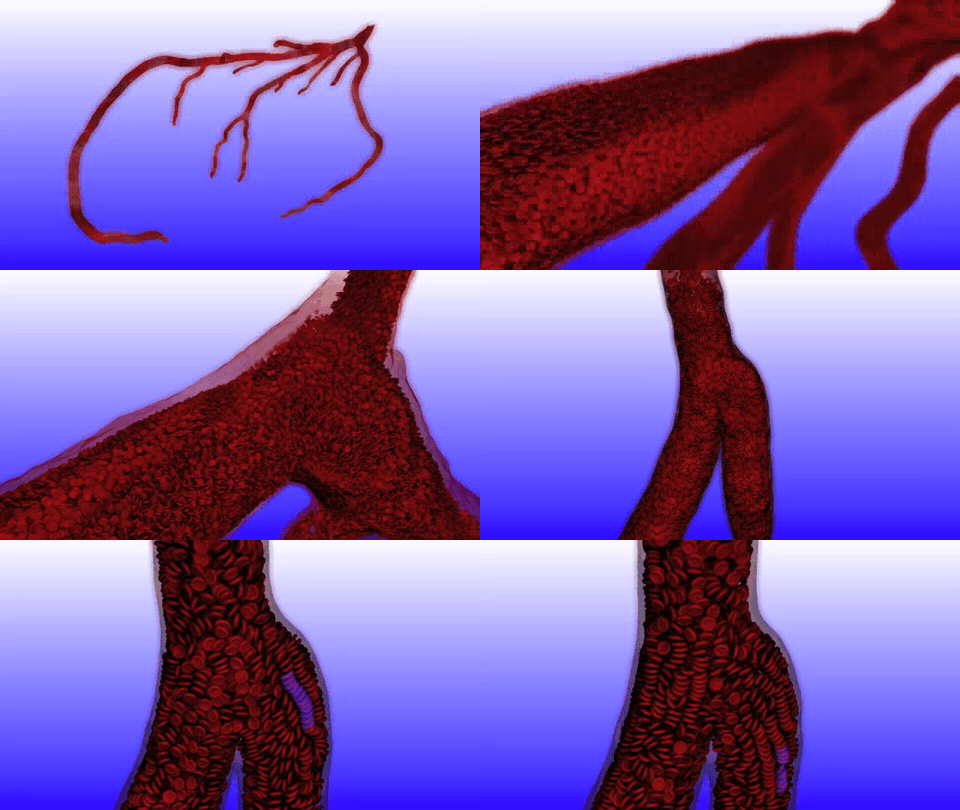
In the cardiovascular field, LeaFlow simulates the implantation of stents, grafts, and valves, assessing their effects on local flow dynamics, wall shear stress, and downstream perfusion. It evaluates risks of restenosis, thrombosis, or embolization by combining patient-specific anatomy with fluid dynamics and particle transport. The platform supports pre-procedural planning as well as virtual prototyping of new cardiovascular devices.
In renal and urological systems, LeaFlow simulates the insertion of ureteral stents, catheters, or implants such as artificial sphincters. It models how these devices influence urinary dynamics, local pressure gradients, and the flow of particles or sediments. This capability extends to simulating scenarios such as stent encrustation, reflux prevention, or the impact of partial obstruction.
Device design teams use LeaFlow to iteratively test prototypes in realistic virtual anatomies, reducing reliance on animal models and physical mockups.
Anatomical reconstruction from imaging

LeaFlow has a powerful imaging pipeline that transforms tomographic datasets, such as CT and MRI scans, into anatomically accurate 3D models.
The platform automatically identifies and reconstructs airways, vascular structures, renal tracts, and other flow-relevant anatomical domains. The resulting models maintain detailed spatial fidelity, capturing both macrostructure and fine features critical for physiological simulations. This capability supports personalized decisions and predictive diagnostics.
Integration with CAD
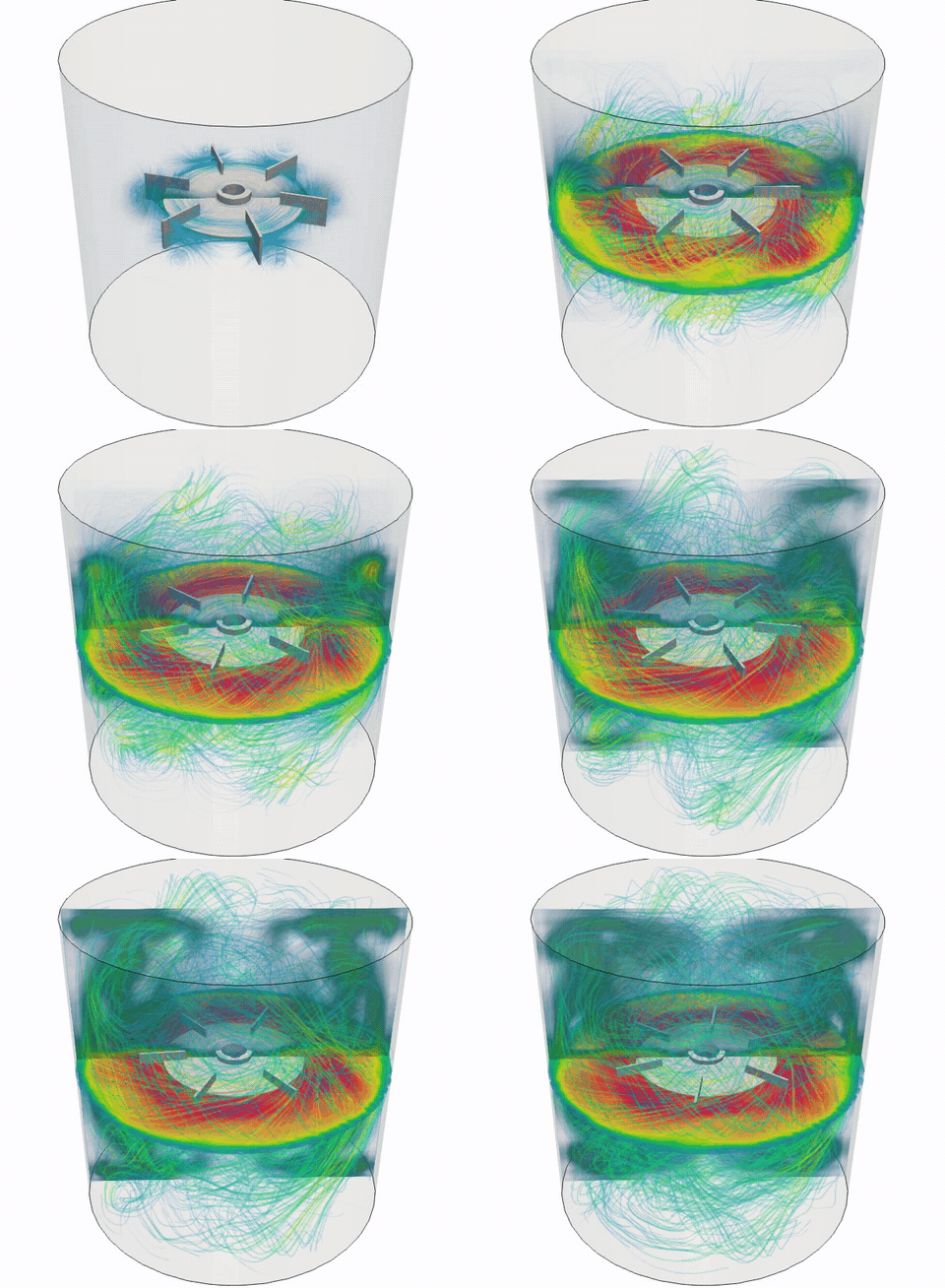
LeaFlow is fully integrated with industry-standard CAD platforms, enabling the import, modification, and export of customized geometries within anatomical contexts. Engineers and designers can insert medical devices such as stents, valves, catheters, or delivery systems into patient-specific models and examine how their geometry affects local flow and tissue interaction. Conversely, anatomical models can be exported to CAD environments for advanced geometric manipulation, structural analysis, or 3D printing.
Integrate clinical and engineering collaboration
By combining automated reconstruction and CAD compatibility, LeaFlow provides a unified workflow for clinical and engineering teams.
Surgeons can visualize proposed device placements within real anatomy, while biomedical engineers can simulate dynamic mechanical responses under realistic physiological conditions.
Whether the goal is to plan a procedure, validate a new device prototype, or assess performance under adverse scenarios, LeaFlow connects imaging, simulation, and design in a continuous collaborative cycle.
Simulate in the Cloud
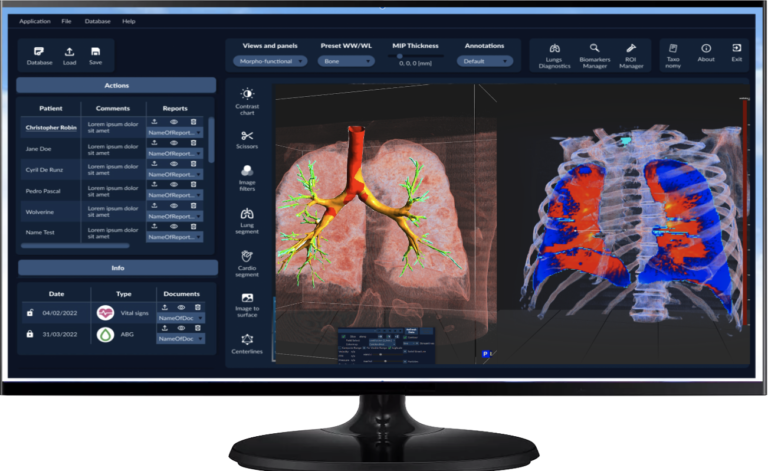
Designed with scalability and accessibility in mind, LeaFlow runs in both cloud-based and on-premise computing environments, using GPU acceleration for real-time or batch simulations. Its API-oriented architecture supports integration with surgical planning tools, training simulators, and regulatory-compliant validation pipelines.
With an intuitive visual interface and detailed output data analysis, including velocity fields, deposition maps, pressure gradients, and residence times, LeaFlow turns complex biomechanics into actionable data. More than a flow simulator, LeaFlow represents a leap forward in dynamic physiological modeling, patient-specific and system-level.